
Where Everyone Is Traveling Right Now (And Why)
Americans are booking Japan, Paris, Lisbon, U.S. national parks, Maui, Puerto Rico, and South Florida because those trips match what travelers want right now: strong air access, recognizable names, and enough flexibility to tailor the trip without starting from scratch. The 2026 booking pattern is less about one dominant destination and more about a few places that feel worth the effort.
Key takeaways
- Demand is clustering around places that feel easy to book, easy to picture, and worth the spend.
- Japan and Paris remain strong for long-haul trips, while Lisbon and Osaka-style alternatives keep rising.
- U.S. national parks and warm-weather getaways are still drawing major interest, especially for shorter planning windows.
- The best signal is the mix of search interest, airlift, and hotel availability, not hype alone.
- Flexible dates and secondary cities can save money and help travelers beat the crowds.
You can see that pattern in search behavior across Google Flights, Expedia, Booking.com, Airbnb, and Marriott Bonvoy, and Skift coverage keeps pointing to the same practical reality: travelers may research more, but they still want a trip they can actually book without friction. The destinations pulling ahead tend to fit tighter budgets, shorter planning windows, and a preference for experiences that feel worth sharing.
Why these destinations are winning
- Airfare and hotel pricing pressure is pushing travelers toward destinations that still feel worth the spend, especially on long-haul trips where one weak conversion can kill the whole itinerary.
- Search, social media, and creator-driven discovery are concentrating demand around places that photograph well, feel fresh, and show up repeatedly in trip-planning feeds.
- Off-season and shoulder-season travel are stretching budgets and lowering friction, which matters more when travelers are trying to avoid peak pricing and peak crowds at the same time.
- Experience-first trips are beating generic resort stays for many early adopters, especially younger travelers and remote workers who want a trip with a clear point of view.
The pricing story is real, but it is more specific than “cheap flights.” The U.S. Travel Association has long emphasized the mix of price, access, and traveler confidence, and that combination matters most where airlines add seats, hotels have enough inventory, and demand is still growing. When those pieces line up, a destination gets more attention than one with limited access or tight capacity.
Behavior matters just as much. Travelers are not only chasing the lowest fare; they are choosing places that feel timely, easy to explain, and unlikely to disappoint after months of seeing the same handful of destinations on social feeds.
Top places people are booking in 2026, by trip type
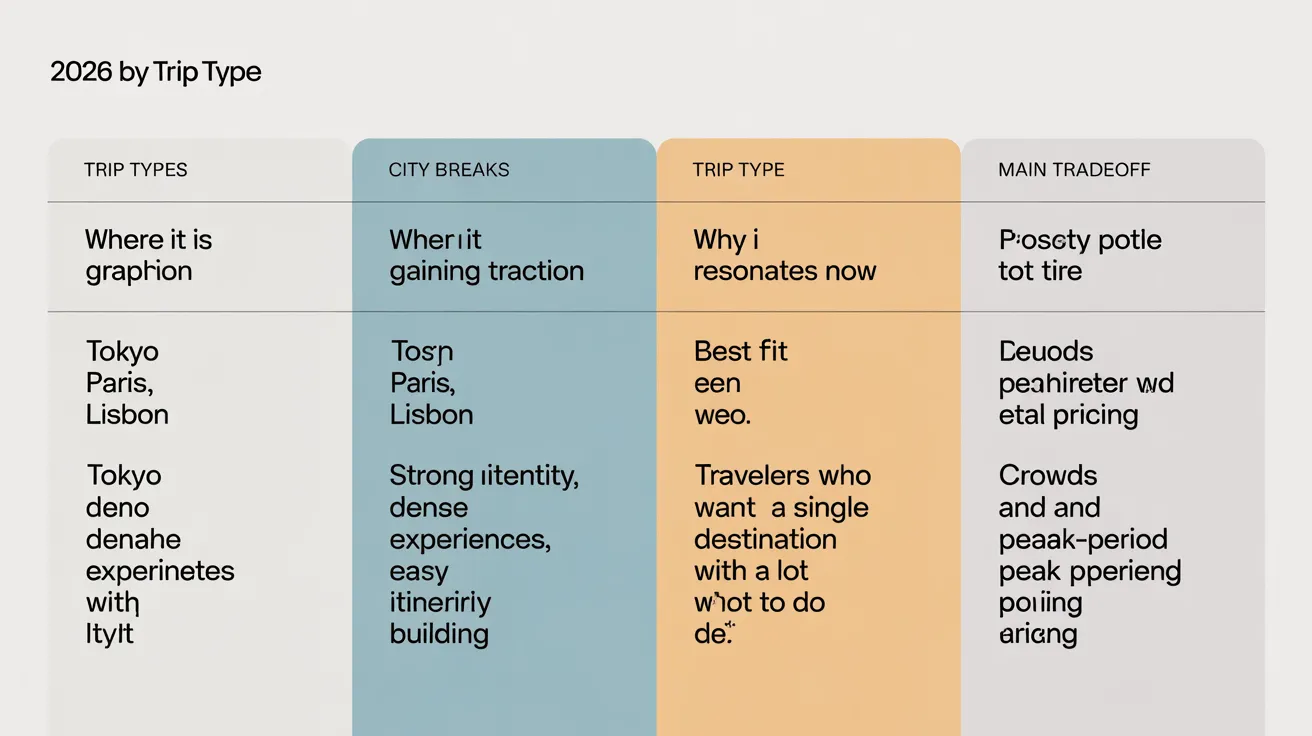
| Trip type | Where it is gaining traction | Why it resonates now | Best fit | Main tradeoff |
|---|---|---|---|---|
| City breaks | Tokyo, Paris, Lisbon | Strong identity, dense experiences, easy itinerary building | Travelers who want a single destination with a lot to do | Crowds and peak-period hotel pricing |
| Beach escapes | Maui, Puerto Rico, South Florida | Warm-weather certainty and easy short-break planning | People who want sun without a complicated logistics chain | Weather risk and premium holiday rates |
| Adventure trips | Utah’s national parks, Alaska, Yellowstone region | Outdoor focus, high-shareability, and a clear “do something” hook | Travelers who prefer activity over lounging | Limited lodging inventory near popular gateways |
| Domestic road trips | California’s Highway 1, Tennessee to North Carolina mountain routes | Flexible timing, multi-stop planning, and easier budget control | Groups and remote workers who can stretch a trip | Fuel, driving time, and weather variability |
Japan remains one of the clearest examples of durable demand because it offers a rare mix of cultural depth, strong rail transit, and a trip that feels both ambitious and manageable. Tokyo, Kyoto, and Osaka each give travelers a different version of the same appeal. Paris does something similar for long-haul city breaks, with landmarks like the Eiffel Tower, the Louvre, and the Seine giving first-timers an obvious entry point and repeat visitors plenty of room to branch out.
Lisbon keeps attracting Americans who want Europe without the higher sticker shock of cities like London, Paris, or Amsterdam. The city also fits the way many travelers plan now: walkable neighborhoods, food-first itineraries, and enough neighborhoods, viewpoints, and day-trip options to fill a long weekend without overscheduling every hour.
On the domestic side, U.S. national parks continue to pull travelers who want a trip that feels more like a reset than a routine vacation. The National Park Service’s timed-entry systems and advance-reservation rules at parks such as Yosemite, Glacier, and Arches have made planning more deliberate, but that is part of the appeal for travelers who are willing to trade spontaneity for a better on-the-ground experience.
Warm-weather destinations have a different appeal. Maui, Puerto Rico, and South Florida draw travelers who want sun, easy logistics, and a quick escape from winter, but the value equation changes fast when Christmas week, spring break, and school calendars collide. In those periods, the hotel room can cost more than the flight, especially in places with limited beachfront inventory.
How to choose a destination before it gets overhyped
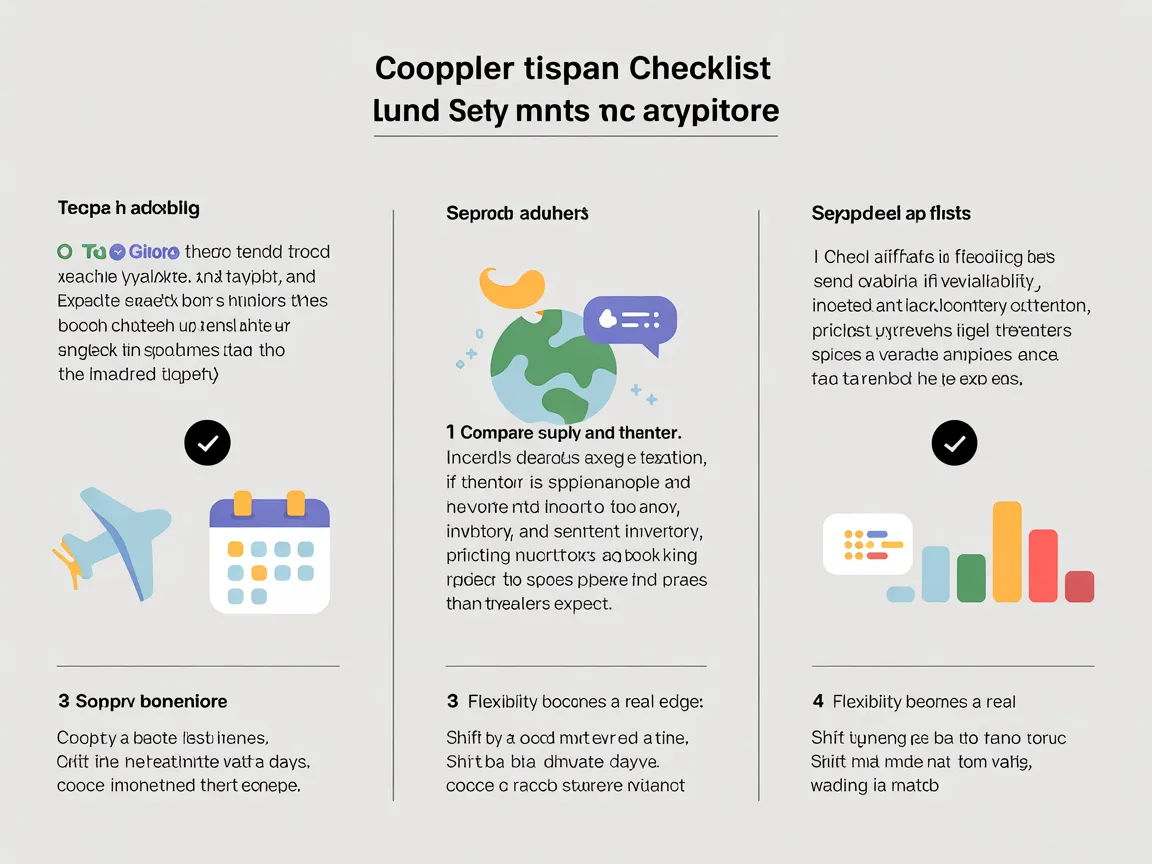
- Check airfare trends, hotel availability, and search interest together. If Google Flights shows tightening fares, Expedia and Booking.com inventory looks thinner, and social chatter is spiking at the same time, the destination may already be moving from early to crowded.
- Look for secondary cities and nearby alternates that deliver a similar experience at a better price. A traveler eyeing Paris might compare Lyon; someone considering Tokyo might test Osaka or Fukuoka; a park-heavy itinerary in Utah may work better from a less obvious base.
- Use flexible dates, shoulder seasons, and weekday departures to lower costs and reduce crowding. That is where the real leverage sits, especially for destinations that are getting discovered faster than new rooms or new seats can appear.
- Verify entry rules, weather patterns, and local capacity before you commit. A good trip can go sideways if you miss visa rules, arrive during a bad weather stretch, or book into a place that is already stretched thin.
The smartest read is to compare supply with attention. If searches rise faster than flight seats and hotel rooms, prices usually firm up quickly. If a destination gets more interest and more inventory at the same time, travelers have a longer window to book without paying the peak premium.
That is why flexibility matters so much. A traveler who can shift by a few days, fly into a nearby airport, or choose a strong independent hotel instead of the best-known brand often saves money without changing the trip itself.
What smart travelers are doing differently in 2026
Smart travelers are booking earlier for limited-inventory destinations and later for markets that are still soft on demand, and that split is easy to miss until you compare destinations side by side. A high-demand international city can sell out quickly, while some domestic markets still reward patience if the dates are not fixed.
They are also pairing one headline stop with one less obvious nearby stop. That can mean spending most of a Europe trip in Paris, then adding Lyon, Lille, or another secondary city with lower hotel rates and shorter lines. It can also mean building a national-park road trip around one marquee park and one quieter nearby area that does not require the same level of advance booking.
Trip design is getting more tactical too. Walkability, transit access, and cancellation terms now matter as much as décor for many travelers, because nobody wants to pay a premium and then lose hours to parking, traffic, or long transfers after a flight.
Points and fare alerts are back in the standard toolkit for a reason. They help travelers keep options open while prices move, especially on routes where airfare can swing sharply from one week to the next.
Marriott Bonvoy members often use points to reduce the cost of high-rate nights on long-haul trips, while Airbnb guests may trade hotel-style consistency for more space, a better location, or a kitchen when the numbers make sense. The right choice depends on whether the trip is built around convenience, size, or location.
TSA checkpoint volumes keep reminding travelers that peak travel days are still peak travel days, so leaving on a Tuesday instead of a Sunday, or returning on a Wednesday instead of a Monday, can save time as well as money.
The real shift is strategic. Early adopters are no longer asking only where they can go. They are asking which destination will still feel sharp after they book it, arrive, and share it.
The practical read on 2026 demand
If you want to travel ahead of the crowd, focus on destinations with real access, not just online buzz. A place becomes compelling when flights, hotels, and traveler behavior line up at the same time, and that is what keeps Japan, select European cities, park-country America, and warm-weather escapes near the top of the list right now.
The strongest bookings are going to places that can handle attention without losing their appeal. That is the test for 2026: not whether a destination is popular, but whether it still offers enough room, value, and character after everyone else notices it too.
Frequently asked questions
What are the biggest travel trends in 2026?
Travelers are favoring trips that feel experience-rich, visually appealing, and easier to plan with confidence. Shoulder-season timing, shorter booking windows, and stronger value are shaping most decisions, especially for people balancing limited vacation time against rising prices.
Which destinations are getting the most attention right now?
Japan, Paris, Lisbon, U.S. national parks, Maui, Puerto Rico, and South Florida are among the clearest demand winners. They each fit a different travel style, but all combine name recognition with a practical reason to book now rather than later.
How can I find a trending destination before prices spike?
Watch airfare, hotel inventory, and search buzz together. Once all three tighten at the same time, the window for a good deal is usually closing fast.
Is domestic travel still strong in 2026?
Yes. U.S. national parks and warm-weather domestic trips are still attracting plenty of travelers, especially people who want simpler planning, lower friction, and a trip that does not require a long international flight.
When is the best time to book travel for 2026?
Earlier is usually better for high-demand trips, but the sweet spot depends on the destination. For crowded markets, booking during shoulder season or locking in flexible dates can make a big difference, especially when hotel inventory is tight or airfare starts climbing.