
How to Start a No Spend Weekend Challenge
A no spend weekend challenge means setting a clear 48 to 72 hour window, then spending only on the small list of exceptions you decide on ahead of time, such as gas for a necessary trip or a prescription pickup. To make it work, set the boundary, shut down impulse buys, and decide how you’ll log any unavoidable charge before Friday night.
Key takeaways
- Set a fixed 48 to 72 hour window before Friday night, then treat every spend inside it as either blocked or preapproved.
- Build a written exception list first, because gas, prescriptions, and urgent repairs are the only purchases that should survive the weekend rule.
- Use a hard cap for any allowed category, such as US$20 for one planned stop, so the challenge stays measurable instead of vague.
- Log any unavoidable purchase immediately with the amount and reason, so one exception does not turn into a missed spending review.
- If the weekend feels too strict, switch to a low-spend version with one capped category instead of abandoning the reset entirely.
What a no spend weekend really means
A no spend weekend is a time box, not a mood, so it needs a start and an end. A common setup runs from Friday after work through Sunday night, but any fixed window works if you write it down and treat it like the rule, not a suggestion.
Spend covers more than the obvious purchases. Cash, card charges, app purchases, delivery fees, tips, and fees tied to optional add-ons all count, because they still leave your account and muddy the reset you’re trying to create.
The realistic version names its exceptions before the weekend begins. Gas for a necessary trip, a prescription pickup, or an urgent household fix can be allowed without turning the challenge into a free-for-all, as long as you decide that upfront.
A true no spend weekend means no discretionary spending at all inside the window. A low-spend weekend means you allow a capped category, like one coffee or groceries already on hand, which is often better for beginners who need a softer entry than an all-or-nothing rule.
How to plan allowed spending before Friday
Sort every category into blocked, allowed, or allowed with a cap before the weekend starts, because last-minute decisions are where the money leaks happen.
- List the categories you want off limits, such as takeout, browsing Amazon, Target runs for nonessentials, app-based rides, and entertainment purchases. Then mark the few that stay open, like groceries already in the pantry or one planned coffee, so the rule is visible instead of vague.
- Map meals, errands, and downtime by day. If lunch is already packed and Saturday errands are grouped together, you remove the opening that usually leads to a convenience purchase.
- Set a hard cap for each allowed category in a note, budget app, or phone reminder before Friday evening. If you are allowing $20 for one planned grocery stop, write $20, not "about twenty," so the limit is obvious when you are tired.
- Decide how shared spending works if other people in the household are participating, opting out, or splitting some costs. One person paying for the family pizza while another is doing the challenge is still a real edge case, so agree in advance who covers what.
How to avoid accidental purchases during the weekend
The easiest way to avoid accidental spending is to remove the triggers that make spending feel automatic.
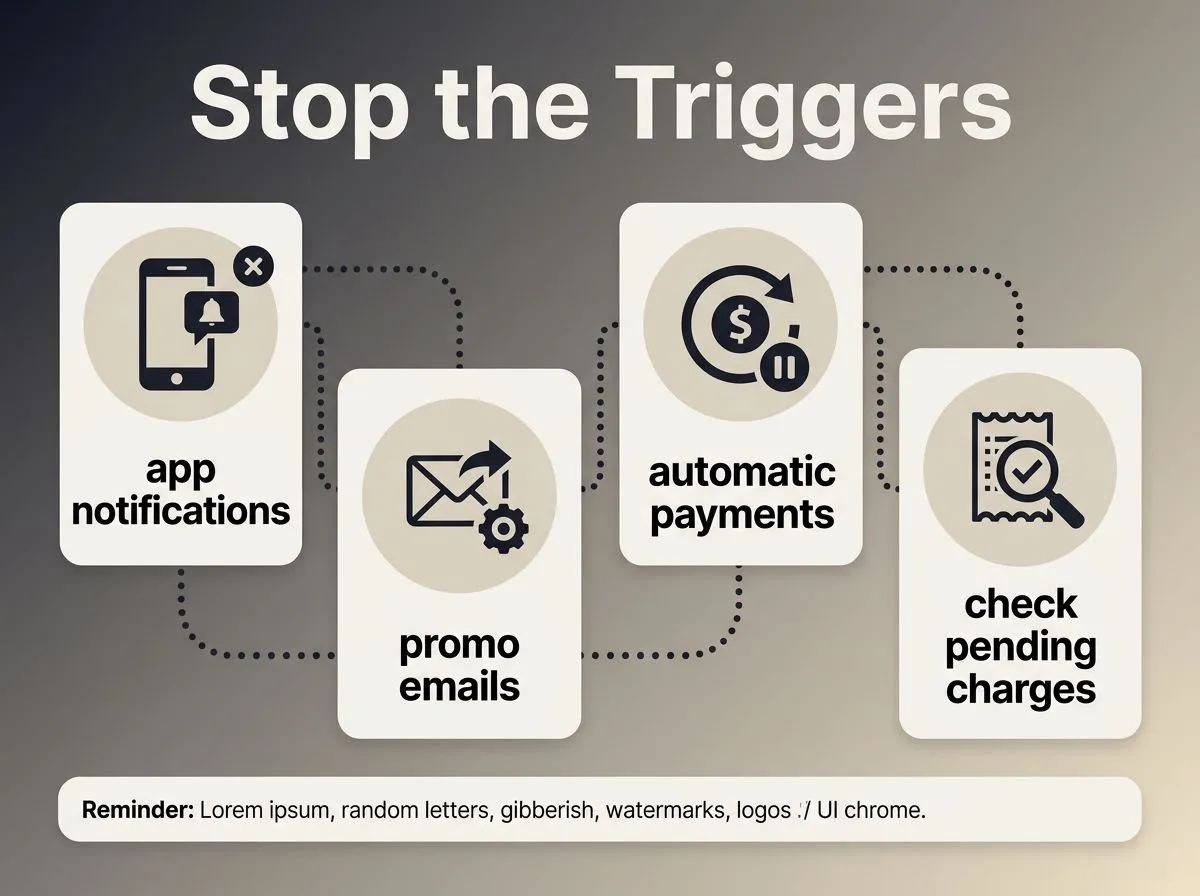
- Turn off shopping app notifications and promo emails that tempt you into unplanned purchases. The point is not to become immune to ads, just to stop seeing them while you are trying to hold a boundary.
- Remove saved cards or one-click checkout where you can, especially in retail and food delivery apps. If a checkout requires extra steps, the impulse usually cools down long enough for you to notice you do not need the item.
- Check for scheduled renewals, auto-refills, and pending orders that could post during the weekend. A subscription renewal is easy to miss until it lands, which is why the review needs to happen before Friday.
- Build a fallback list of free activities and at-home meals so boredom does not become spending. A no spend weekend gets much easier when you already know what to do at 4:00 p.m. on Saturday.
If you use budget or account apps, this is also the time to open them and check for pending charges. Mint and Monarch Money both help you spot transactions you forgot about, but your bank and card issuer are still the source of truth for anything actually posted.
What to do if an unavoidable purchase comes up
An unavoidable purchase is one you can’t safely skip without creating a bigger problem, such as emergency medicine, a flat tire, or a work-related necessity.
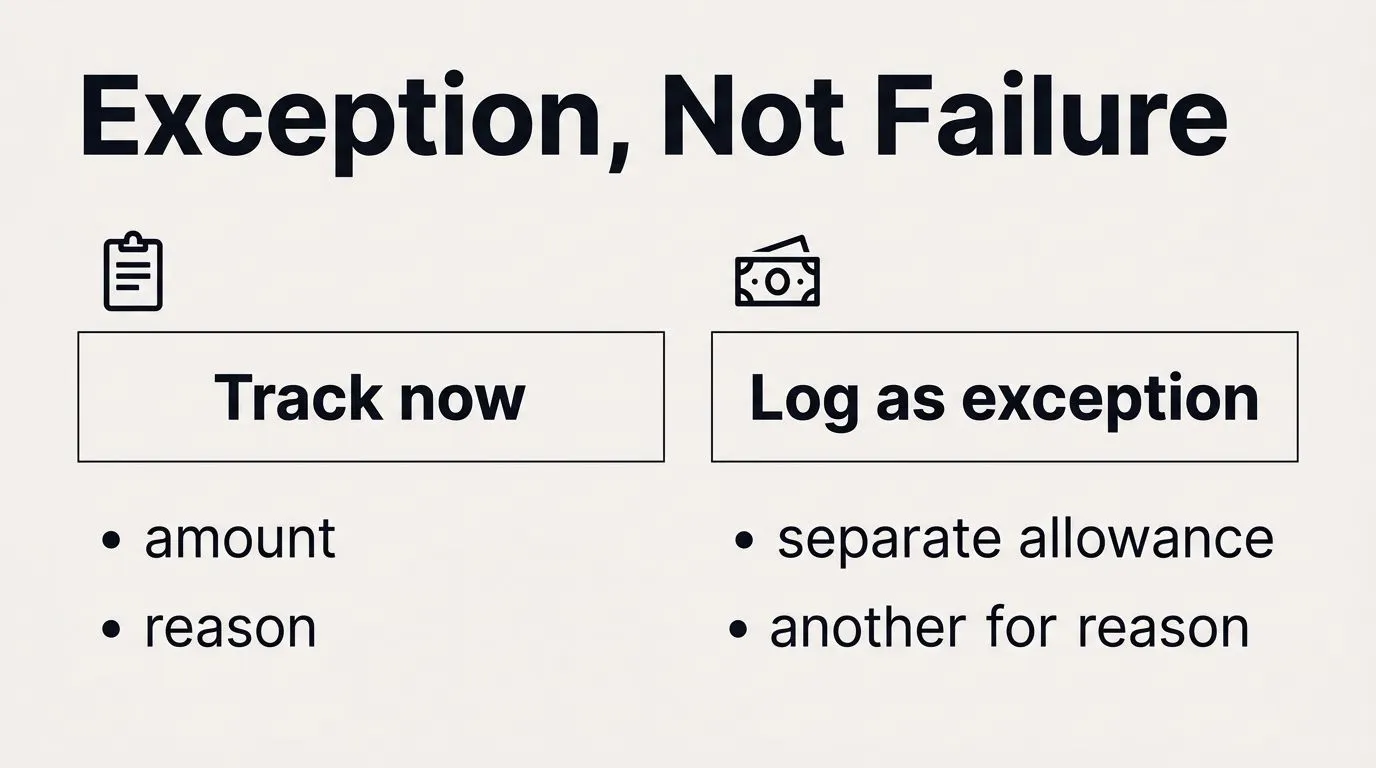
Track the purchase right away with the amount, category, and reason, because memory gets fuzzy fast once the weekend is over. If you wait until Sunday night, the exception often turns into a vague story instead of a useful record.
The cleanest way to keep the challenge honest is to log the charge as an exception, not a failure. That means you subtract it from a separate allowance, note it in your budget app, or write it down in a simple weekend log so you can review the decision later without rewriting the whole challenge.
Decide in advance whether a true emergency ends the challenge or simply creates a recorded exception. If the emergency is real and unavoidable, the lesson isn’t that the weekend failed, it’s that the rule was strong enough to make the exception visible.
How to turn one no spend weekend into a repeatable reset
A repeatable reset starts with reviewing where spending almost happened, not just where it actually happened.
- Review the near misses first. If you almost ordered lunch, bought snacks, or opened Amazon out of boredom, that is the friction point to fix next time.
- Note which allowed categories were too loose and which restrictions felt too strict. If your exception list was so broad that the weekend felt meaningless, tighten it; if it was so rigid that you bailed early, loosen it.
- Save a simple template with dates, allowed categories, and one-line rules for the next weekend. A reusable note is faster than rebuilding the challenge from scratch every month.
- Use the weekend to identify one recurring leak, such as delivery fees, convenience snacks, or subscription drift, then fix that leak for the following month. One specific repair is more useful than a vague promise to "spend less."
If you want a practical benchmark for the rulebook itself, anchor the challenge to your own spending habits instead of a public standard. The Consumer Financial Protection Bureau and the Federal Trade Commission are useful references for consumer protection basics, while the Consumer Financial Protection Act is part of the legal backdrop for how financial services are supervised, but your weekend rule should still be simpler than any law or policy summary.
For checkout behavior, watch the places that make spending easiest: Visa and Mastercard card-on-file settings, and the purchase paths inside the Apple App Store, Google Play Store, Amazon, Target, and Walmart. Those aren’t the problem by themselves, but they’re where a no spend weekend usually gets broken by one tap.
How to decide whether the challenge fits your situation
A no spend weekend fits you if your problem is impulse spending, convenience fees, or drifting into small purchases that don’t feel big in the moment but add up by Sunday night.
It doesn’t fit well if your weekend already includes unavoidable spending for caregiving, job travel, or medical needs that can’t be moved. In that case, a low-spend weekend with capped categories is the better tool because it gives you room for real life without abandoning the reset.
The best version is the one you can repeat next month without resenting it. If the challenge makes you hide purchases, break the rule by noon, or treat every exception like a failure, the boundary is too tight and needs revision.
The final decisions are simple: choose the time window you can defend on the calendar, choose the exception list that covers only true necessities, and choose the tracking method you’ll actually use on Sunday night. If those three choices are clear, the challenge stops being a vague money goal and becomes a working weekend plan.
Frequently asked questions
Can I still use my debit card on a no spend weekend?
Yes, if you use it only for the categories you already allowed. The payment method does not matter nearly as much as whether the charge fits your pre-set exception list. A debit card purchase for a planned grocery stop or gas is fine; a random Target run is not.
Does a no spend weekend include gas for commuting to work?
Usually no, if the commute is unavoidable and you defined that exception before Friday. The article treats gas for a necessary trip as a valid exception, so work driving fits that same logic. The key is to separate required travel from optional errands or detours.
What if a subscription renews during the weekend?
Treat it as a charge you should have checked ahead of time, because scheduled renewals can quietly break the reset. If it truly was unavoidable, log it as an exception with the amount and reason, then cancel or pause it for next time if you can. That keeps the weekend honest without turning one auto-charge into a failed challenge.
Is grocery shopping allowed during a no spend weekend?
Only if you decide in advance that groceries are an allowed category and set a hard cap. The article also distinguishes a true no spend weekend from a low-spend weekend, and groceries fit better in the capped version if you need them. Otherwise, stock up before Friday so you are not making the decision in the moment.