
How to Reduce Food Waste With Leftover Vegetables
Leftover vegetables are easiest to save when you sort them by how you’ll use them next, then keep them cold and work them into another meal within a few days. The safe routine is pretty simple: refrigerate them right away at 40°F or below, use cooked vegetables within 3 to 4 days, freeze whatever won’t get eaten, and reheat only the portion you plan to eat to 165°F.
Key takeaways
- Cooked vegetables are safest to use within 3 to 4 days, so plan a second meal before day 4 or freeze them.
- Keep leftovers at 40°F or below and reheat only the portion you will eat to 165°F.
- Sturdier vegetables like roasted carrots, potatoes, and squash hold up better than leafy greens and watery vegetables.
- Small mixed vegetable leftovers work best in soup, fried rice, scrambles, and casseroles, where texture matters less.
Which leftover vegetables are easiest to reuse, and which need faster attention
Cooked root vegetables, roasted trays, and mixed vegetables are the leftovers with the most range, since they can slide into soups, bowls, hashes, and quiches with very little extra prep.
| Vegetable type or form | Best next use | Storage durability | Texture after reheating | Best freeze? |
|---|---|---|---|---|
| Roasted carrots, potatoes, squash, beets | Soup, hash, grain bowl | Handles the full refrigerated window well | Softens, but usually stays pleasant | Yes |
| Steamed broccoli, green beans, cauliflower | Fried rice, casserole, scramble | Best used earlier in the window | Can turn softer and less crisp | Yes, though texture is best in mixed dishes |
| Raw-cut celery, peppers, onions, mushrooms | Quick sauté, stir-fry, omelet | Use fast if already cut | Keeps more bite if cooked briefly | Usually yes, especially chopped |
| Leafy greens, herbs, zucchini | Soup, saute, frittata, filling | Needs faster attention than dense vegetables | Wilted texture is expected | Sometimes, but quality drops more quickly |
| Watery vegetables that were overcooked | Puree, soup, sauce | Use soon | Texture is already fragile | Yes only if you accept a softer result |
That order matters because sturdier vegetables handle reheating and freezing better than delicate ones. A roasted carrot can disappear into a soup and still taste like it belongs there. Limp greens can still earn their keep, but they stop working well in dishes that depend on a fresh snap.
How to store, freeze, and reheat cooked vegetables safely
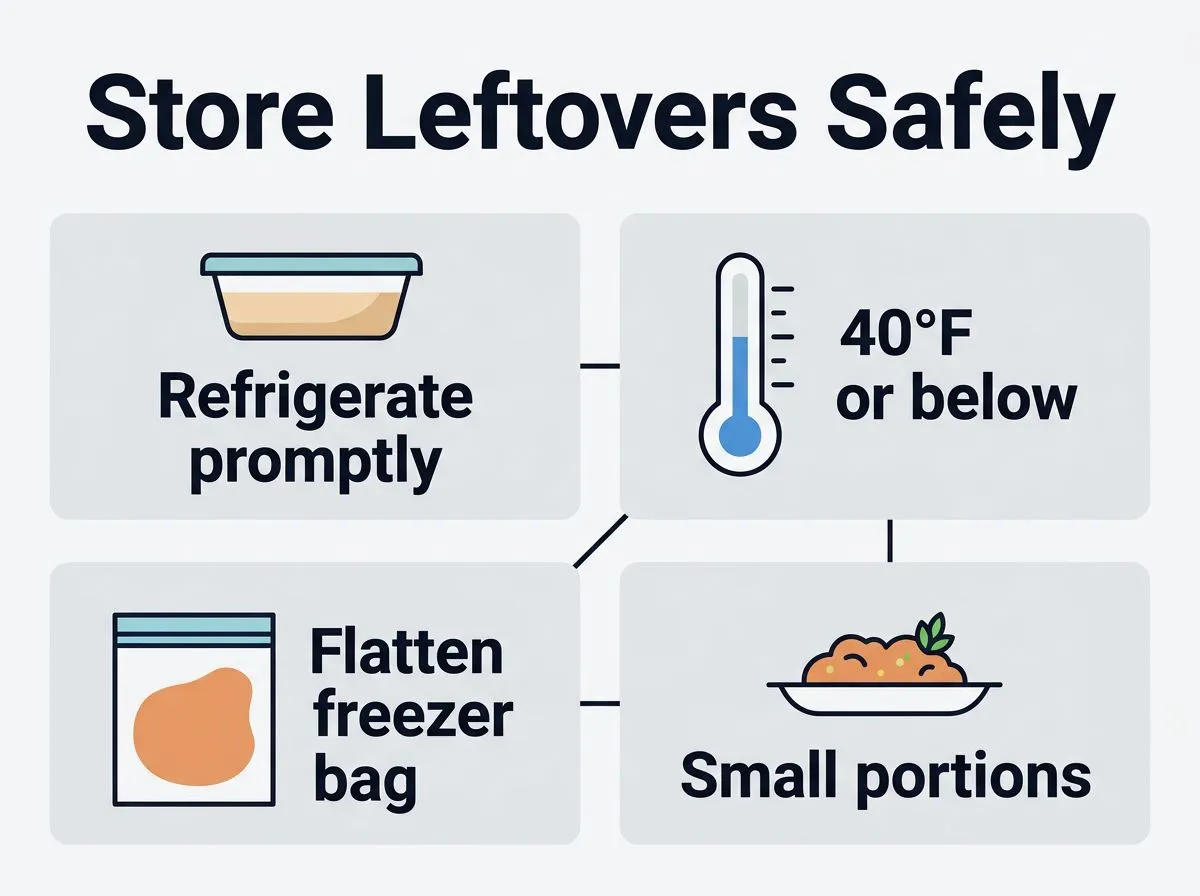
- Refrigerate cooked vegetables promptly and keep the fridge at 40°F or below. The USDA Food Safety and Inspection Service says leftovers should be refrigerated promptly, and FoodSafety.gov ties safe cold holding to that 40°F threshold. That number matters because temperature abuse is where leftovers become risky, not because cold storage is fancy.
- Use leftovers within 3 to 4 days, or freeze them sooner if you will not use them in time. StateFoodSafety and FoodSafety.gov both point to that window for cooked leftovers. If you know the vegetables are not getting a second meal by day four, freezing is the smarter move, even if the texture will soften later.
- Store vegetables in airtight containers or freezer-safe bags with as much air pressed out as possible. USDA guidance stresses wrapping or sealing leftovers to keep bacteria out and moisture in, and the air removal also helps limit freezer burn. Less air means less dry, bland food later.
- Reheat only the portion you plan to eat and bring leftovers to 165°F when reheating. Putnam County Health Department says previously frozen leftovers can be safely reheated to 165°F, and reheating the whole batch over and over is a quality mistake because vegetables get mushy fast.
If you’re freezing a mixed vegetable side, flatten the bag so it freezes faster and stacks neatly. Smaller portions thaw faster too, which makes it easier to reheat only what you need instead of sending the food through another round of cooling and heating.
Easy meal ideas that turn small amounts of mixed vegetables into dinner
Small amounts of vegetables work best in dishes that already expect variety, moisture, or a little texture loss.
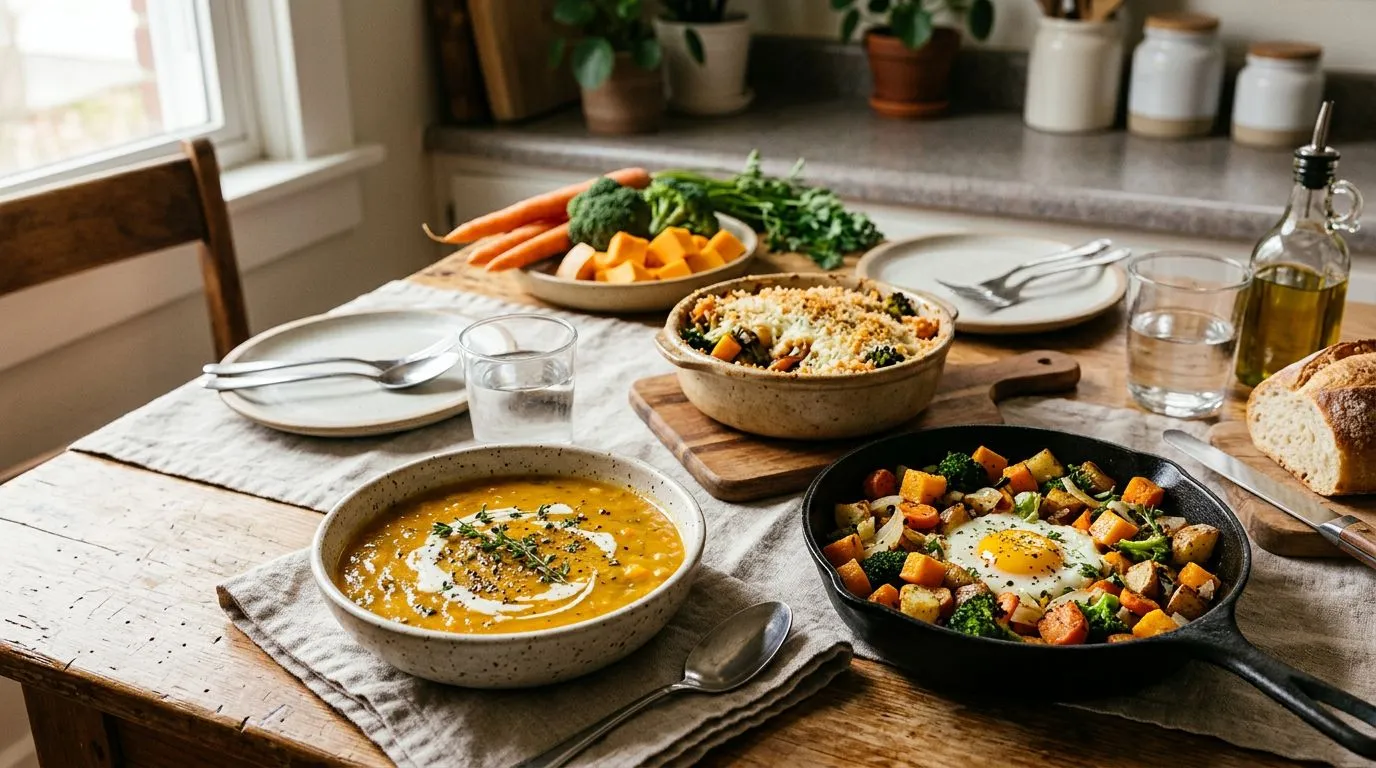
- Soups and purees, because leftover vegetables can be simmered into a base and blended smooth when they are uneven in size or softness. BBC Food and Knorr both lean on leftover soups as a practical waste-saving move, and Spoon Fork Bacon shows the same idea with a leftover vegetable soup built for whatever is in the fridge.
- Fried rice, grain bowls, and stir-fries, because chopped vegetables can be folded in near the end and seasoned as a group. Cookie and Kate treats fried rice and stir-fries as reliable leftover makeovers, especially when you have a little of several vegetables instead of one full serving of anything.
- Quesadillas, tacos, and breakfast scrambles, because eggs, cheese, and tortillas cover gaps in quantity and help salvage vegetables that would look sparse on their own. That is a good use for cooked peppers, onions, mushrooms, spinach, and broccoli florets.
- Quiches, tarts, casseroles, and hash, because the egg or starch base holds the vegetables together and makes two cups of leftovers feel like a real meal. Arla Foods specifically points to hash, quiches, and tarts as natural homes for mixed vegetable leftovers.
The practical rule is to match the vegetable to the dish’s texture, not just its flavor. Soft roasted squash belongs in soup or a bake. Crisp-tender broccoli can still hold up in fried rice. That separation keeps you from forcing every leftover into the same recipe and ending up with yet another half-used container.
Meal-planning habits and common mistakes that make vegetable leftovers spoil faster
The best way to cut food waste is to plan cooked vegetables for one meal plus one reuse, not for some loose stretch of future use.
Plan portions for a second meal on purpose
Cook just enough extra vegetables to cover a second dish you can name before you start cooking. That might mean roasting an extra sheet pan of carrots for soup, or making enough sautéed peppers and onions to fill tomorrow’s omelet. When leftovers already have a job, they’re less likely to sit in the back of the fridge until you forget about them.
Cool and pack them in shallow portions
Shallow portions cool faster than deep containers, which helps vegetables get back into the fridge-safe zone sooner. That matters because a large hot container stays warm in the middle long after the top feels cooled. Split a big batch into smaller containers if you want better texture and a safer chill.
Do not keep reheating the same batch
Repeated heating and cooling hurts both quality and safety, which is why only the portion you’re going to eat should go into the microwave or skillet. StateFoodSafety says leftover vegetables should stay refrigerated or frozen between uses, and that’s the habit that keeps them from bouncing back and forth through unsafe temperatures. If you need a little more, heat a second serving separately instead of putting the whole pan back on the heat.
Treat power outages as a discard point
If cooked vegetables have spent too long above 40°F during an outage, throw them out instead of tasting them. FoodSafety.gov says the refrigerator keeps food safe for up to 4 hours during a power outage, and its leftover guidance is to discard perishables after 4 hours without power. That’s the hard stop that keeps you from guessing wrong.
Treat leftovers as an ingredient with a deadline, not as a project you’ll get to someday. When you sort by texture, refrigerate quickly, freeze the extras you can’t use, and build the next meal around the vegetables already in your fridge, you spend less, throw away less, and keep dinner from turning into a cleanup job.
Frequently asked questions
Can you refreeze cooked vegetables after they have been thawed?
Yes, if they were thawed safely in the refrigerator and stayed at 40°F or below. The quality may drop a little, and delicate vegetables like zucchini, leafy greens, or overcooked vegetables usually suffer more texture loss than roasted carrots or potatoes. If they sat out at room temperature, don’t refreeze them.
Should vegetables be reheated before adding them to another dish?
Not always. They can go straight into soups, casseroles, fried rice, omelets, quiches, or quesadillas as long as the finished dish is cooked through and served hot. For a mixed batch, it often works better to fold them in near the end so they do not turn mushy before the whole dish is done.
What is the biggest storage mistake with leftover vegetables?
Leaving them out too long before refrigerating is the biggest mistake. The article’s safe target is to get cooked vegetables into the fridge promptly and keep the fridge at 40°F or below, because warm leftovers spend more time in the danger zone. Shallow portions cool faster than one deep container, which helps too.
How do you know if leftover vegetables are no longer safe to eat?
If they smell off, look slimy, or have been held too long at unsafe temperatures, throw them out. That also includes leftovers with a temperature history you cannot verify, especially after a power outage or a long time on the counter. When in doubt, safety comes first.