
DIY Laundry Detergent Sheets for Budget Households
DIY detergent sheets are thin, pre-measured laundry cleaners made from powdered ingredients pressed into a dry, portable sheet. For budget households, the appeal is straightforward: lower upfront cost, less plastic, and the chance to make only what you’ll actually use. The trade-off is consistency. A homemade sheet has to dissolve cleanly, wash well, and stay dry without crumbling apart.
Key takeaways
- Start with a test batch for 3 to 5 loads so one bad ratio does not waste a full supply.
- Use a teaspoon-at-a-time liquid addition, then stop when the mix just holds together, not when it turns paste-like.
- Test the first sheet in 1 normal wash cycle, especially in cold water, where residue problems show up first.
- If your water leaves scale or your loads are heavy, expect to need a stronger formula or a store-bought option.
- Skip the batch entirely if the sheet crumbles in storage, leaves residue, or cannot handle a small load cleanly.
What Ingredients Are Actually Needed for DIY Detergent Sheets
The minimum workable mix includes a cleaning powder, a binder, and just enough liquid to hold the sheet together. A basic formula usually relies on washing soda or another laundry builder for soil removal, plus a gentle detergent powder or soap powder for surfactant action. The binder has one job, keep the sheet intact until it hits the wash, then break apart instead of going gummy.
Ingredients that sound “extra clean” are often the least useful. Fragrance boosters, dyes, glitter-style add-ins, and bulky fillers do not improve washing performance, and they can make a sheet thicker, dustier, or slower to dissolve. If you’re after savings and simplicity, those extras mostly add cost and mess.
A safer, smarter approach is to keep the formula short and skip anything that can irritate skin or make the washer work harder. Fine powders blend more easily than coarse or sticky ingredients, and a batch that clumps in the bowl usually clumps in storage too. That’s the beginner mistake that wrecks homemade sheets: too much liquid, which turns the mix into paste and leaves you with hard-to-break slabs.
Borax-free recipes and formulas that use washing soda are not the same thing. Borax-free means the recipe avoids borax specifically, while washing soda is a different laundry booster that many homemade formulas use for alkalinity and help with grease-cutting. If you’re choosing between the two, read the label on the ingredient bag, not the shorthand in a blog post.
How to Make DIY Detergent Sheets at Home in Small Batches
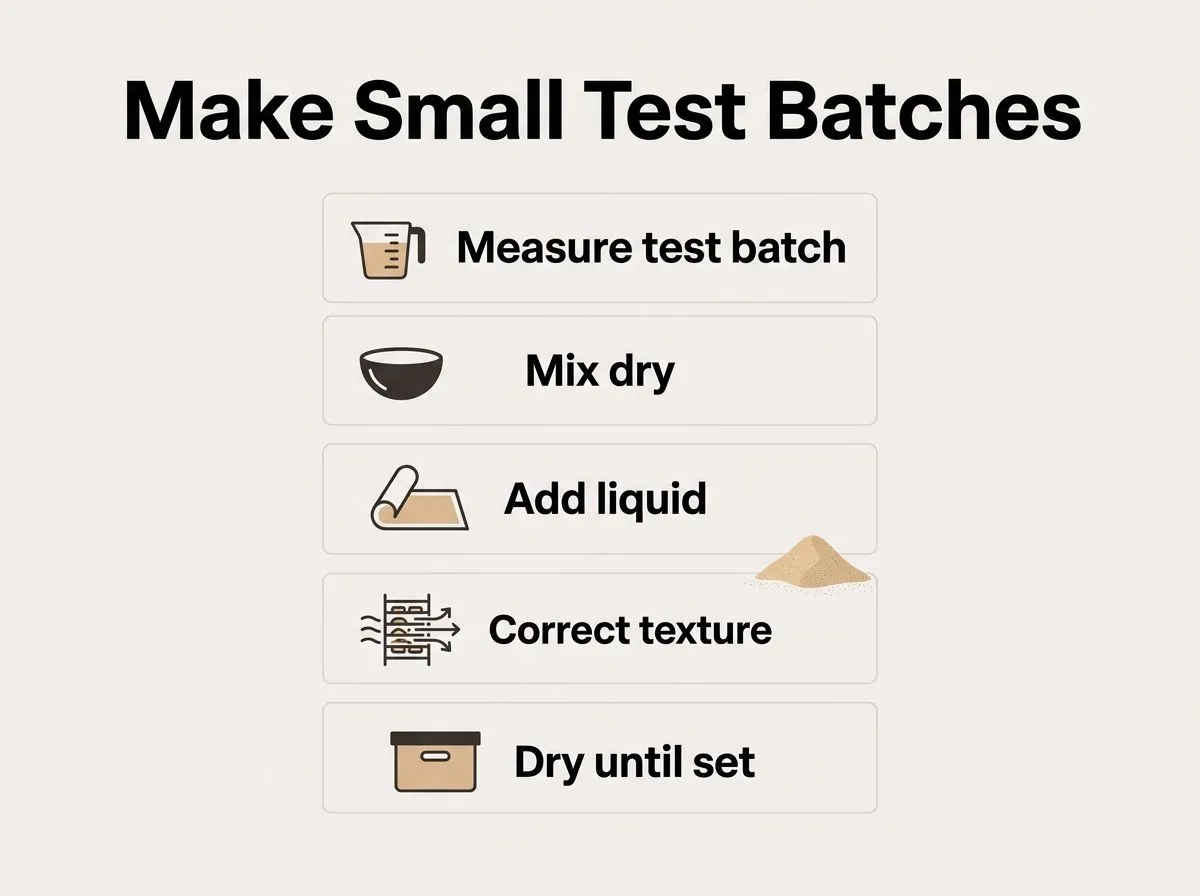
- Measure a small test batch first, enough for a few loads, so a bad ratio does not waste much material.
- Mix the dry ingredients in a bowl until the color and texture look uniform, then add liquid a teaspoon at a time.
- Stop adding liquid as soon as the mix presses together when squeezed, but still looks crumbly instead of wet.
- Spread the mixture thinly on parchment or a silicone mat and smooth it to an even thickness with a spatula or flat scraper.
- Let it dry fully, then cut or tear it into sheet-size pieces and separate the pieces before storage.
- Test one sheet in a normal wash cycle with a small load and check whether any residue remains in the drum, dispenser, or on fabric.
The right texture is closer to damp sand than batter. If it smears like frosting, it probably has too much liquid and will dry into a brittle or sticky sheet. If it won’t hold together at all, add liquid in tiny increments until it just compacts under pressure.
Drying time depends on thickness, humidity, and airflow, so the safest rule is to wait until the sheet feels firm through the middle, not just dry on the surface. Cut it too early and the center can stay soft, which makes the pieces curl or fuse back together in storage. A small fan in a dry room helps more than heat, and it avoids scorching or sealing moisture inside.
For the first wash, use a normal cycle and a modest load, not an overloaded basket of towels. If the sheet is still visible in the washer after the rinse or leaves sticky residue on fabric, the batch needs a thinner spread, less binder, or a simpler formula.
Performance Variables to Test Before You Rely on Homemade Sheets
Water hardness changes homemade sheet performance fast, because minerals in hard water can weaken cleaning and slow dissolution. In softer water, a modest sheet may break apart and clean more predictably; in hard water, the same sheet can leave more residue or need a stronger builder to get the job done. If your tap water already leaves scale on fixtures, expect laundry formulas to work harder too, and test before you commit to a full batch.
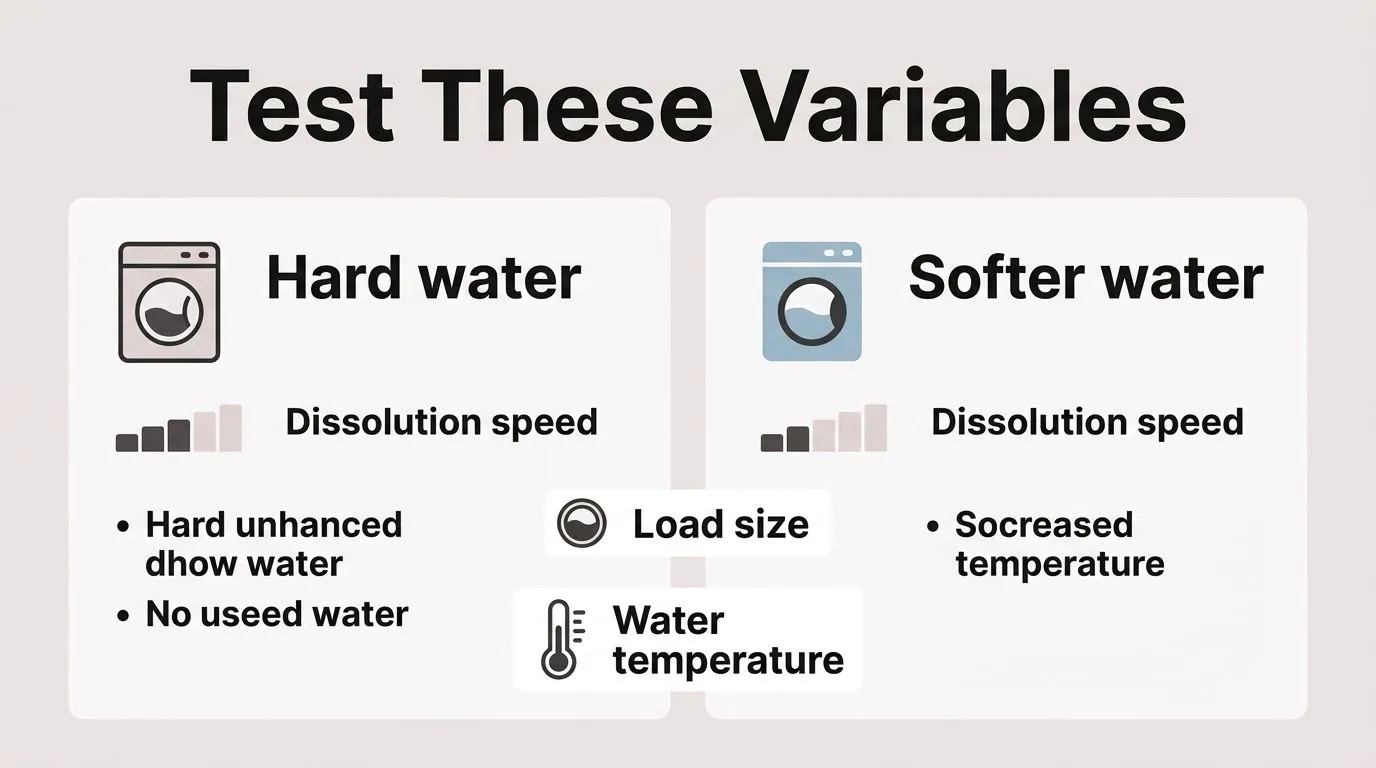
Load size matters because a thin sheet can be enough for one small everyday load and too weak for a packed washer. Body oils, food stains, and mud don’t behave the same way either, since oily soil usually needs stronger surfactant help while mud may rinse away more easily if it isn’t ground in. A homemade sheet that handles T-shirts well may still struggle on workout clothes or kid spills.
Water temperature changes how quickly the sheet breaks apart. Cold water is harder on dissolution, so it’s the first place residue problems show up, while warm water usually gives the formula an easier start. Hot water is rarely the best test of real-world performance, because many households wash everyday items in cold or warm settings to save energy and protect fabric.
A simple repeatable test is the same shirt or towel load, the same washer setting, and the same water temperature each time. Compare one homemade sheet against your usual detergent, then inspect the drum, the dispenser, and the fabric after the cycle ends. A workable result means no visible residue after one wash, no crumbling after a 7-day storage test, and no obvious cleaning gap compared with your standard wash. Fail means one of those signs shows up and the formula needs revision.
Consumer labels from brands like Tide, Arm & Hammer, Seventh Generation, Molly’s Suds, and Meyers Clean Day are useful mainly as a comparison point, because commercial products are already tuned for predictability. That’s the practical benchmark: compare residue, dissolution, and stain removal in the same load, then decide whether your homemade sheet is close enough to keep using. For independent testing context, Consumer Reports and Good Housekeeping are the names shoppers usually check, while The Spruce is a common how-to reference for household care basics.
Storage, Handling, and Safety Problems Beginners Run Into
- Store finished sheets in an airtight container so humidity does not soften them.
- Keep the container labeled and dry, away from sinks, steam, and laundry-room splashes.
- Wear basic hand protection if your powder mix is dusty or irritating, and avoid creating clouds when you scoop or cut.
- If edges crumble, the batch was usually too wet, too thin, or not dry long enough.
- If sheets stick together, separate them with parchment or let them dry longer before stacking.
- Use child- and pet-resistant storage, because a homemade cleaner still needs the same caution you would give any detergent product.
The best cleanup habit is to work over a tray or lined counter so stray powder ends up in one place instead of on the floor. Brush off tools before washing them, then seal the remaining sheets before moisture has a chance to creep in. That small routine saves more product than trying to rescue a clumped batch later.
Safety is also about what you don’t try to fix yourself. If you have a sink backup, washer leak, or electrical problem in the laundry area, that’s repair work for a qualified professional, not a detergent project, because water and electricity are a bad mix and leaks can turn a cheap cleanup into property damage. The sheets themselves are DIY, appliances and wiring are not.
When Homemade Detergent Sheets Make Sense, and When Store-Bought Is the Better Buy
Homemade detergent sheets make the most sense when you want a small, low-risk experiment and don’t mind a bit of trial and error. The upfront cost can be lower if you already have the dry ingredients and a container, but the real savings depend on whether your recipe works on the first few tries. Time counts too: mixing, drying, testing, and fixing a batch can take longer than ordering a box online.
Store-bought sheets are the better buy when you need cleaning that behaves the same way every wash. Commercial products are built to dissolve and perform consistently, and that matters even more in hard water, large loads, or households that do laundry on a tight schedule. If you’re washing school clothes, work uniforms, or anything that can’t afford a miss on rinse day, reliability wins out over tinkering.
For budget households, DIY often makes the most sense as a small batch for light, regular laundry, then a switch to store-bought if the results are uneven. That approach cuts waste and shows you quickly whether the homemade version is actually saving money or just moving the cost into your time. The USDA is a useful reminder here in a broad household-budget sense: small recurring expenses matter, but so do the hidden costs of storage space, spoilage, and replacement purchases.
The practical decision comes down to three checks: how hard your water is, how dirty your laundry usually is, and how much time you want to spend troubleshooting. If any one of those is a stress point, commercial sheets or liquid detergent are probably the better everyday choice. If all three are manageable, a homemade sheet can be a decent low-volume option for occasional loads and test batches.
Start with your water, because hardness changes the outcome more than trendy ingredients do. Then look at batch size, since small runs limit waste while you learn what dissolves and what doesn’t. Leave store-bought for last only if you need consistency, speed, or easier storage, which is usually where convenience starts turning into the cheaper option in practice.
Frequently asked questions
Can DIY detergent sheets be used in high-efficiency washers?
Yes, as long as they dissolve fully and do not leave clumps in the drum or dispenser. HE machines are less forgiving of residue, so a thin, fully dry sheet is safer than a thick one, especially if your first test wash still shows sticky bits or film on the fabric.
Do homemade detergent sheets work in cold water?
They can, but cold water is the toughest test because it slows dissolution and is usually where residue shows up first. If a sheet only works in warm water, that tells you the recipe still needs adjustment before you rely on it for everyday laundry.
How long do homemade detergent sheets last in storage?
They last as long as they stay dry, firm, and separate from one another. In practice, airtight storage matters more than a set calendar date, because humidity can soften the sheets, make them stick together, or turn the edges crumbly long before you use them up.
Are homemade detergent sheets safe for sensitive skin?
Only if the formula stays simple and avoids fragrances, dyes, and other common irritants. If you have sensitive skin, make a tiny batch first and patch-test it before washing a full load, because even a clean-looking sheet can still trigger a reaction.