
Cheap Pantry Staples That Work in Mexican Meals
Cheap pantry staples for Mexican meals are the low-cost ingredients that keep turning up in tacos, bowls, soups, and breakfast plates without spoiling fast or taking over cabinet space. The best ones are affordable per serving, easy to find at U.S. chains like Walmart, Target, Kroger, ALDI, and H-E-B, and flexible enough to pull real weight across several dinners.
Key takeaways
- A smart budget staple earns its spot if it can support at least 2 meals, not just one recipe.
- Canned beans save time in under 10 minutes; dried beans usually win on cost per serving if you can soak them.
- Keep 4 core flavor builders on hand, beans, rice, tortillas, and canned tomatoes, for the fastest weeknight meals.
- Rinse canned beans when you want less sodium, and use the liquid only if the recipe needs extra body.
- Use one pantry base, one seasoning path, and one topping so the same ingredients can cover 3 to 4 different dinners.
What Counts as a Cheap Pantry Staple
A real budget staple is cheap enough to buy again, useful enough to use up before it goes stale, and common enough that you can replace it without digging through specialty aisles. So judge it by price per serving, shelf life, and how many meals it can support, not by the lowest sticker price on the shelf.
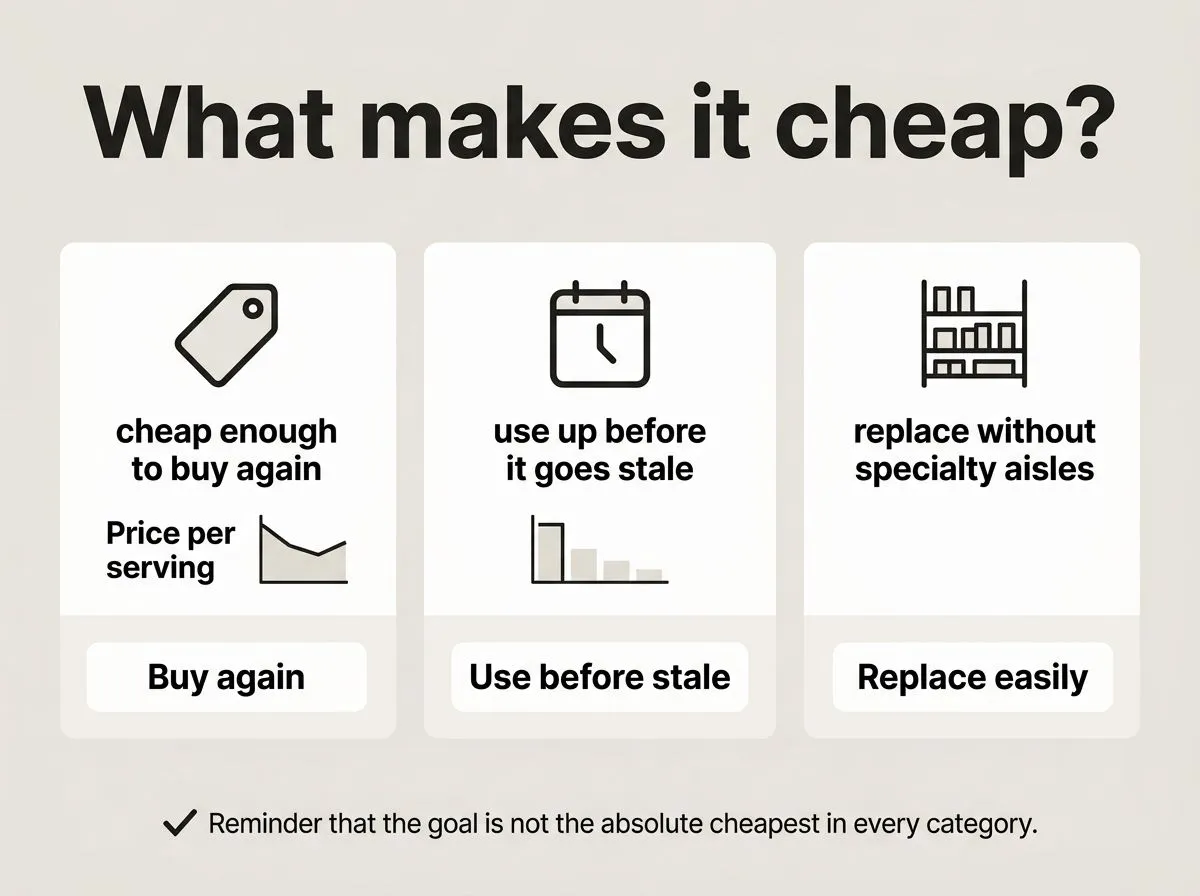
Price per serving matters because a $2 canister that makes two meals is often better value than a $1 item that disappears in one recipe. Shelf life matters because dried beans, rice, and sealed spices can sit for months, while tortillas and opened cans need to be used faster. Meal count matters because the pantry space you give one ingredient should buy you more than one dinner plan.
The goal is not to buy the absolute cheapest item in every category. It’s to buy the item that keeps earning its spot, because it helps you cook repeatable meals without waste, extra trips, or a cabinet full of ingredients that only work once.
The Best Cheap Mexican Pantry Staples to Keep on Hand
- Dried beans and canned beans both deserve space. Dried beans are the cheapest option when you have time to soak and simmer, while canned beans win on speed because they are ready in minutes; the right choice is the one that matches your weeknight schedule.
- Rice and instant rice give you a low-cost base for bowls, side dishes, and fillings. Regular rice stretches farther and usually tastes better, while instant rice is the backup for nights when you need dinner on the table fast.
- Flour tortillas and corn tortillas serve different jobs. Flour tortillas hold juicy fillings and fold without cracking, while corn tortillas give tacos, tostadas, and enchiladas the texture many Mexican-inspired meals need.
- Canned tomatoes, tomato sauce, and green chiles are the fastest path to flavor. They turn beans, rice, and shredded meat into something saucy with almost no prep, and they are easy to stock from standard U.S. supermarket shelves.
- Onions, garlic, and basic dried spices do the heavy lifting. Cumin, chili powder, oregano, and paprika are the pantry backbone for quick seasoning, while onions and garlic build the base flavor that makes beans and tomato dishes taste cooked instead of flat.
- Lard, cooking oil, and bouillon add body and fast seasoning. Oil helps with frying tortillas and sautéing aromatics, lard gives richer flavor in beans or masa, and bouillon can stand in for a quick broth when you need a soup or stew to taste fuller.
How These Staples Turn Into Real Meals
These staples turn into real dinners when you give each meal one base, one seasoning path, and one finishing texture. That way, the same ingredients don’t start tasting identical by midweek.
- Build bean and rice bowls with a hot base, a spoon of salsa, and a crunchy topping. Warm rice first, then beans, then add whatever fresh or jarred topping you have, because heat helps the beans and rice carry flavor and keeps the bowl from tasting dry.
- Turn beans, rice, and canned fillings into tacos or tostadas. Mash or spoon the beans into the tortilla first so the filling sticks, then add rice or another filling on top, because that layer prevents the tortilla from tearing and gives every bite more body.
- Make a quick soup or stew with canned tomatoes and beans. Start by sautéing onion and garlic in oil, add tomatoes, beans, water or broth, then simmer until the broth tastes rounded, because the short simmer time lets the tomato lose its raw edge and the beans absorb the seasoning.
- Use pantry staples for breakfast-for-dinner meals like huevos rancheros or breakfast tacos. Warm tortillas, fry or scramble the eggs, then add beans or rice underneath, because the starch keeps the eggs from feeling like a side dish and makes the meal more filling.
- Repeat the same base ingredients without repeating the same meal by changing the format, heat level, and topping. Beans can be mashed one night, spooned whole the next, and simmered into soup after that, which is how a small pantry avoids boredom without adding new shopping trips.
Nutrition and Food-Safety Basics for Pantry Foods
The easiest label habit is to check sodium on canned beans and tomatoes before you buy. Lower sodium gives you more control over the final dish, while higher-sodium cans can still work if you plan to rinse the beans or dilute the cooking liquid.
Rinsing canned beans helps when you want a cleaner flavor and less surface salt. It won’t remove all the sodium, but it does wash away some of the can liquid, which also helps the beans taste less metallic in bowls and salads. If you’re making a soup or stew, keep some of that liquid only if you actually want the thicker body.
Dry beans should be stored in a sealed container in a cool, dry place so they don’t pick up moisture or pantry pests. If they smell musty, show insect damage, or take forever to soften even after a long simmer, they’re past their best use for weeknight cooking. Older beans aren’t always unsafe, but they can become frustrating and waste fuel.
Tortillas, oils, and spices each fail in different ways. Tortillas go stale, crack, or grow mold, oil smells stale or paint-like when it turns, and spices fade until they mostly smell dusty instead of aromatic. If the smell is flat, the flavor will be flat too, so don’t expect old spice jars to rescue a bland dish.
Opened canned goods and cooked leftovers need refrigeration within 2 hours, which matches standard FDA food-safety guidance. Move food into a clean container, cover it, and chill it promptly so the leftovers stay usable for another meal instead of becoming a food-safety gamble.
Smart Substitutions When You Need a Cheaper or Easier Swap
| Mexican staple | U.S. substitute | Best use case | What changes in the dish | When not to swap |
|---|---|---|---|---|
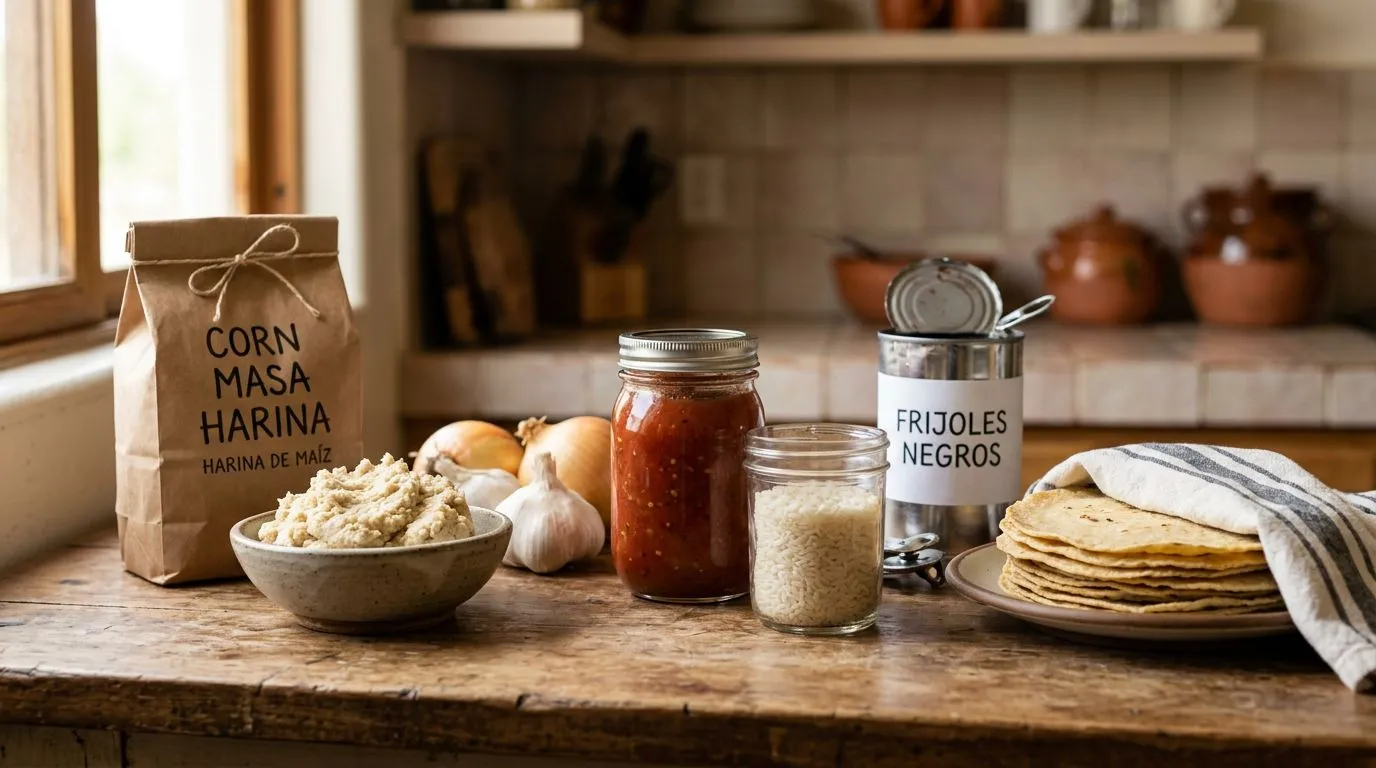
| Fresh masa dough | Maseca corn masa harina | Tortillas, tamales, and quick masa prep at home | The texture is slightly less fresh and needs hydration and resting time | Do not swap when you need the flavor and texture of freshly prepared masa from a tortilleria |
| Mexican-style canned beans | Bush's Best pinto beans or other plain canned beans | Fast bean bowls, tacos, and soup starters | Seasoning is usually milder, so you may need more onion, garlic, cumin, or chile | Do not swap for a dish that depends on a specific bean texture or seasoning profile |
| Mexican salsa or tomato base | Generic canned tomatoes plus green chiles | Quick stews, enchilada-style sauce, and simmered beans | You lose some built-in seasoning and may need salt, lime, or spices | Do not swap when the recipe needs a finished salsa texture and brightness |
| Store-bought tortillas from a Mexican brand | Any fresh supermarket tortillas from a chain like Walmart or Kroger | Weeknight tacos, quesadillas, and wraps | Texture can be softer or drier depending on the brand and package age | Do not swap when the tortilla is the main texture cue, like in crisp tacos or tostadas |
| Specialty masa harina brands | Maseca or La Preferida products | Everyday home cooking, especially when the pantry is tight | Flavor can be a little more neutral, which is usually fine in seasoned dishes | Do not swap when you are chasing a specific regional flavor or family recipe standard |
A Minimal Pantry List for Fast Mexican Weeknight Dinners
- Start with dried or canned beans, rice, tortillas, canned tomatoes, onions, garlic, cumin, chili powder, cooking oil, and bouillon. That set can cover bowls, tacos, soup, and breakfast plates without forcing you into a specialty-store run.
- If the budget is tight, buy beans, rice, and tortillas first. Those three items create the biggest volume of food for the least money, and they are the easiest way to turn small amounts of meat, eggs, or vegetables into a full meal.
- Add canned tomatoes, green chiles, and one good dried chile blend next. Those items change the flavor profile fast, which means you can make one pantry look like several different dinners instead of the same bean plate every night.
- Save lard, extra spice blends, and specialty substitutions for later. They improve depth and flexibility, but they are not the first dollars to spend when you are building a useful pantry from scratch.
- Use a simple buy, cook, replace rhythm: buy the staples that fit your budget at stores like ALDI, Walmart, Target, Kroger, or H-E-B, cook them into two or three meals that week, and only restock the items you actually finished. That keeps the pantry practical instead of aspirational.
Verification Checklist
- Check that the pantry includes at least one bean, one starch, one tortilla, one tomato product, and one seasoning base, and confirm each one can be used in more than one meal.
- Check the sodium line on canned beans and tomatoes before buying, and confirm the number fits your plan for rinsing or seasoning the dish yourself.
- Check that dry beans are stored sealed, cool, and dry, with no musty smell, visible insects, or moisture damage.
- Check tortillas, oil, and spices before cooking, and confirm tortillas are flexible, oil smells neutral, and spices still smell strong enough to season the food.
Frequently asked questions
How long do dried beans and rice really last in a pantry?
Stored in a cool, dry place in sealed containers, dried beans and rice can keep for a long time, but the practical limit is quality, not safety. Rotate them so you use the older stock first, and replace anything that smells musty, shows moisture damage, or has insect signs before it becomes frustrating to cook.
Can I use canned beans without soaking or long cooking?
Yes. Canned beans are already cooked, so they only need draining, rinsing if you want less sodium or a cleaner flavor, and reheating with your seasonings. They are the speed option for weeknights, while dried beans make more sense when you have time to soak and simmer.
Do flour tortillas and corn tortillas behave the same in Mexican recipes?
No. Flour tortillas are softer and more flexible, so they’re better for holding juicier fillings without cracking. Corn tortillas bring the texture many tacos, tostadas, and enchiladas need, and they’re usually the better choice when the tortilla itself should taste like part of the dish.
What should I check on canned goods before using them?
Skip cans that are bulging, leaking, deeply dented at the seam, or rusted through, and always follow the date and storage guidance on the label. For the pantry foods in this article, it also helps to check sodium on canned beans and tomatoes before you buy, since that affects how much you need to season or rinse later.