
Cheap Pantry Meals Built Around 5 Staples
Cheap pantry meals work best when you stop treating rice, pasta, beans, oats, and canned tomatoes like side dishes and start using them as the meal itself. Built the right way, those five staples can carry a week of filling dinners. A small fresh add-on only matters if it clearly improves flavor, texture, or protein.
Key takeaways
- Plan 5 to 7 dinners before you cook, so one pantry haul lasts the week instead of disappearing in 2 nights.
- Use 1 to 1.5 cups of cooked rice or pasta per person, or 1/2 to 1 cup of beans, to make the base feel like dinner.
- Add just 1 fresh onion when it improves 3 or more meals, but skip it if a jarred sauce or seasoned mix already does the job.
- Save 1 back-pocket dinner for the end of the week, usually oats or beans, so you do not run short before grocery day.
Start with five staples that actually make dinners
Rice, pasta, beans, oats, and canned tomatoes can anchor cheap pantry meals because each one has a different job. Rice adds bulk, pasta gives you quick structure, beans bring heft and protein, oats can go savory, and canned tomatoes pull the whole thing together with acid and body.
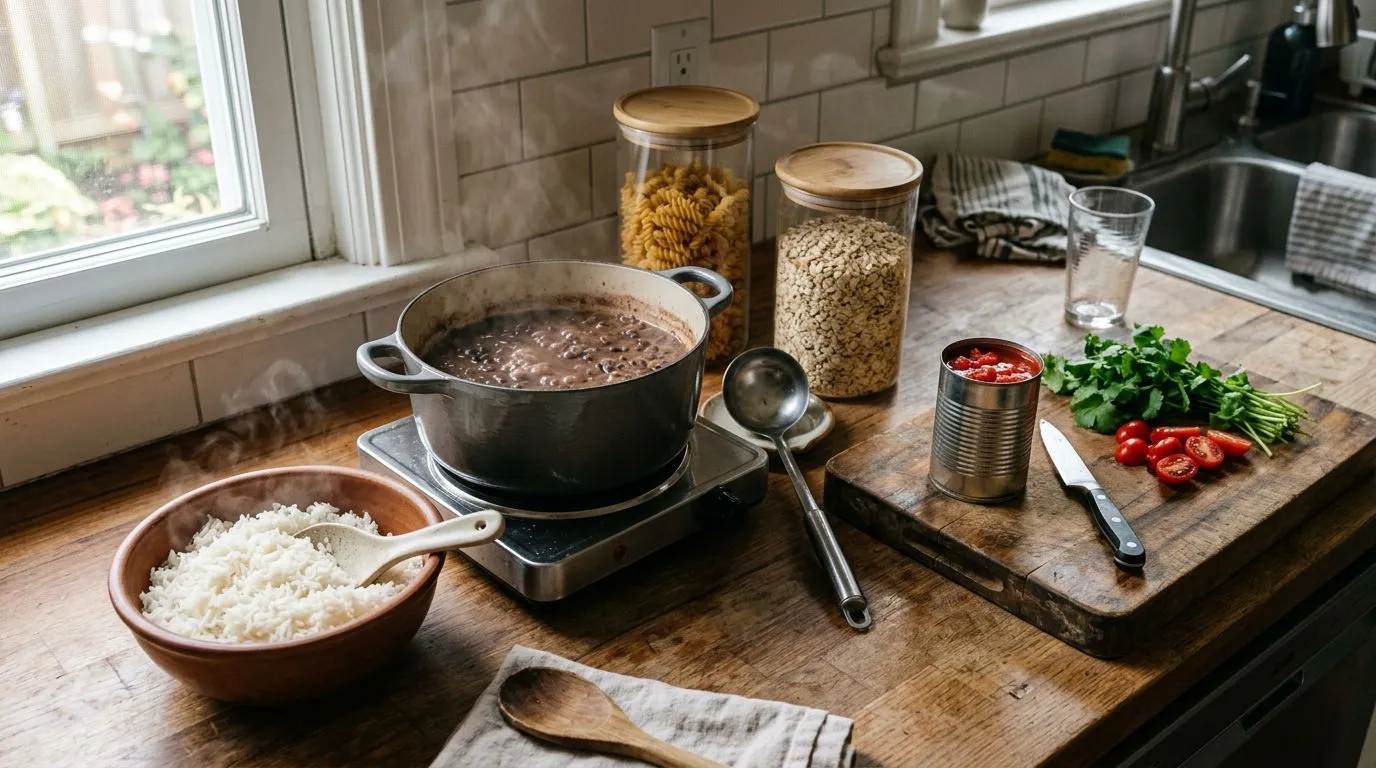
The common mistake is serving dinner portions that are really side-dish portions. For one person, a practical starting point is about 1 to 1 1/2 cups of cooked rice or pasta, 1/2 to 1 cup of beans, or 1/2 cup dry oats cooked into a savory bowl. For two people, double it. For a family, keep the base generous enough that each plate looks like a meal, then add a sauce, bean mixture, or vegetables so the bowl does not feel empty halfway through.
Rice works best as the neutral base under a saucy topping, like beans and tomatoes, because it absorbs flavor instead of fighting it. Pasta does the same job in a more familiar American dinner format, especially with tomato sauce, canned tomatoes, or a little oil and seasoning. Beans can stand alone more than most pantry foods, but they still need liquid or sauce so they eat like dinner instead of a dry scoop.
Oats are the odd one out, but they earn their place because they turn into a fast savory bowl when dinner has to happen with almost no prep. Canned tomatoes are the connector, since they can become sauce, stew base, or the start of chili without asking for fresh produce first.
If you buy one fresh item to lift a pantry meal, make it onion. One onion softens into a base for rice, beans, pasta, and tomatoes, so it pays off across multiple dinners instead of fixing only one plate. Skip it when the meal already has a strong jarred sauce or a seasoned bean mix, because then the onion becomes extra work, not extra value.
Flavor combos that keep cheap pantry meals from getting boring
- Garlic, onion, chili powder, and Italian seasoning build most cheap pantry dinners without forcing a grocery run.
- Beans plus tomatoes become chili, a simple stew, or a rustic sauce, depending on how much water you add and whether you lean spicy or mild.
- Rice plus soy sauce or a seasoning blend turns into a fast rice bowl, especially when you top it with beans, an egg, or a few frozen vegetables.
- Pasta plus canned tomato sauce or crushed tomatoes gives you a plain but complete dinner base that can go red-sauce Italian, smoky, or spicy with one change.
- Swapping one seasoning changes the whole meal: chili powder pushes beans and tomatoes toward Tex-Mex, Italian seasoning pushes the same pair toward pasta sauce, and garlic with black pepper keeps it mild and broadly kid-friendly.
- For savory households, use onion, garlic, and a pinch of salt. For spicy eaters, add chili powder, red pepper flakes, or hot sauce. For mild dinners, use Italian seasoning or a simple garlic-and-oil base so the pantry food stays comforting instead of loud.
How to stretch one pantry haul across a week
Map the haul into a 5 to 7 day dinner plan before you cook anything, as a practical way to keep pantry food from disappearing too fast when you improvise night by night. Start by assigning one staple to each dinner, then reserve enough of the others to create a second meal later in the week.
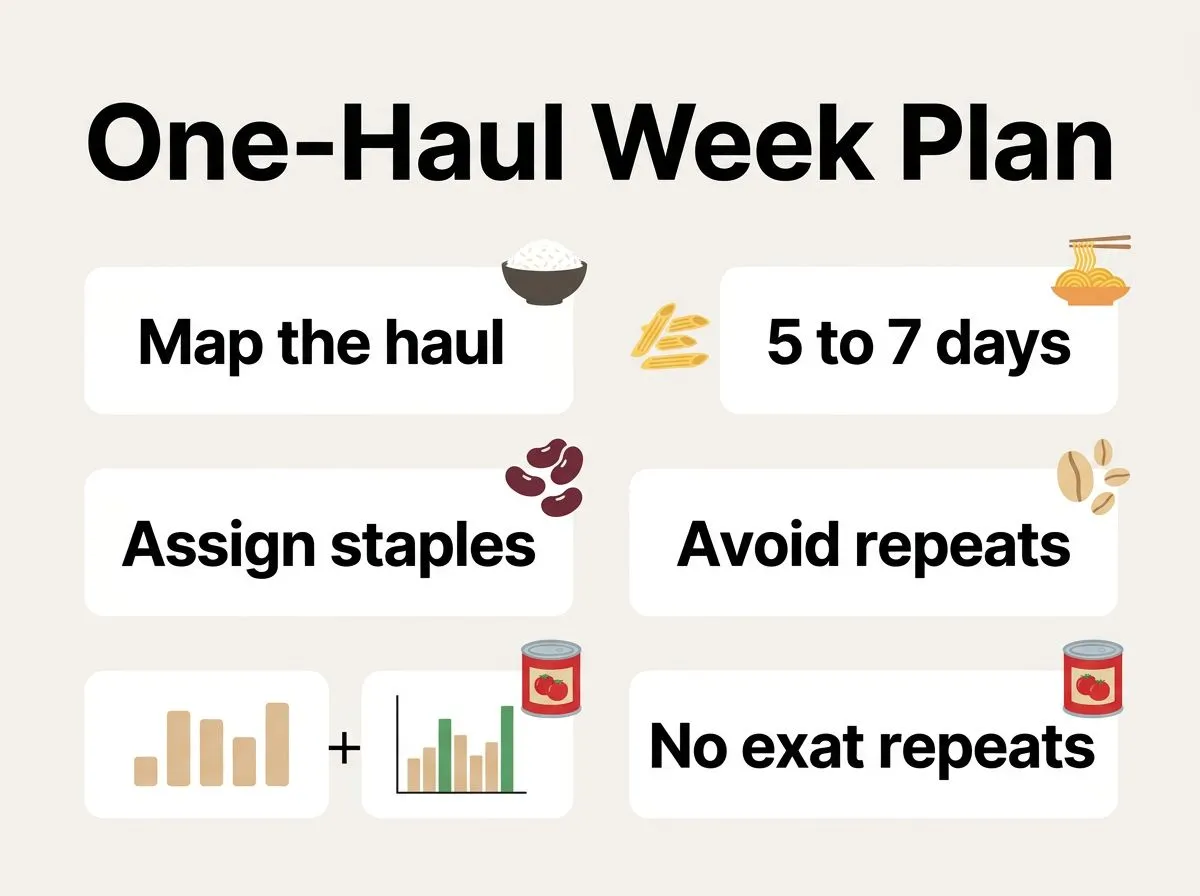
- List the ingredients you already have, then choose the five staples that are most abundant so you do not overbuy duplicates.
- Decide which dinners need a main base first, such as rice bowls on night one, pasta on night two, and beans plus tomatoes on night three.
- Portion the first meal with restraint. If you cook all the rice or all the pasta at once, the rest of the week becomes a rescue mission instead of a plan.
- Cook the most perishable add-ons first, like an onion or leafy greens, and save the driest pantry meals for later in the week.
- Recast leftovers on purpose. Extra beans can become chili over rice, leftover rice can become a skillet bowl, and pasta can be turned into a second dinner with a different sauce.
- Keep one back-pocket meal for the end of the week, usually oats or beans, so you do not run out of dinner material before grocery day.
A week built this way can still repeat the same staple in a different format. The rice can show up as a bowl one night and fried rice the next. Beans can be a spoonable chili early in the week and a thicker stew by the weekend. That change in format matters because it keeps cheap pantry meals from feeling like leftovers in disguise.
Cooking methods that turn staples into full meals
Batch-cooking is the easiest way to make pantry staples feel like dinner instead of parts. Rice or pasta can be cooked once and then reused in bowls, skillet meals, or soups, which saves time and keeps burner space open for the sauce or bean mixture.
- One-pot cooking works best for beans and tomatoes because the liquid, seasoning, and starch can mingle as they simmer. This is the easiest route when dishes and burner space are limited.
- Skillet cooking is the fastest path for rice bowls, fried rice, and quick pasta tosses because it lets you concentrate flavor and stop cooking the moment the texture is right.
- Oven-friendly cooking helps when you want a thicker, baked finish, especially for oats used as a savory base or a casserole-style dinner that needs to set up before serving.
- Beans and tomatoes can become chili or stew with water and seasonings added gradually. The goal is a spoonable texture, not a watery soup, so simmer until the liquid looks slightly reduced and the flavor tastes merged.
- Oats work well as savory breakfast-for-dinner or as a thickener because they absorb liquid and add body. Use them when you need something warm, fast, and filling without a separate starch.
The beginner mistake is cooking every staple the same way. Rice wants a firm, fluffy texture. Pasta wants enough water and salt to taste seasoned all the way through. Beans and tomatoes want simmer time so the edges stop tasting separate. Match the method to the ingredient, and the meal tastes planned instead of assembled.
The safest way to store and use pantry ingredients
Store dry staples and canned goods cool, dry, sealed, and away from pests, then check the package, USDA FoodKeeper, or the product’s official storage guidance when timing matters. FoodSafety.gov and FDA guidance both point readers back to those official storage references because opened items, leftovers, and damaged packaging do not behave like untouched pantry stock.
Throw out any can that is bulging, leaking, badly rusted, or sprays when opened, and do the same for dry staples that smell musty, show mold, or have pest damage. Those defects are not cosmetic. They can mean the food should not be used, even if the date stamp still looks fine.
Once you cook pantry ingredients, they move out of shelf-stable handling and into refrigerator timing. Leftover rice, beans, pasta, or tomato sauce should be cooled promptly and stored cold, then used according to official refrigeration guidance from FoodSafety.gov or the package instructions when the product gives a shorter limit.
That matters because pantry cooking often creates a second meal by design. The safest habit is to treat leftovers like any other perishable cooked food after the first service, not like another can or bag on the shelf. If the exact timing for a specific product matters, check the package or the brand’s storage guidance before you guess.
When to add one fresh item, and when to skip it
| Fresh item | Best use case | Cost impact | Why it helps | Skip it when |
|---|---|---|---|---|
| Onion or garlic | You need a flavor base for rice, beans, pasta, or tomatoes | Low | Adds depth fast and makes pantry food taste cooked, not flat | The pantry meal already has a strong sauce or seasoning |
| Lemon or lime | A bowl, soup, or bean dish needs brightness | Low to moderate | Cuts heaviness and wakes up canned flavors | The meal is already acidic from tomatoes |
| Leafy greens | You want more volume in a skillet, soup, or pasta | Low to moderate | Adds texture and color without changing the whole recipe | You need a longer shelf-life meal for later in the week |
| Eggs | You want extra protein for a rice bowl, fried rice, or oats | Moderate | Turns a simple base into a more filling dinner | You are trying to keep the cost as low as possible |
| Frozen vegetables | You want more nutrition and bulk without a second shopping trip soon | Moderate | Brings color, texture, and flexibility | You are making a very fast sauce or chili and already have enough volume |
The best fresh add-on is the one that solves a specific gap, not the one that sounds like a better dinner in theory. Onion and garlic are the cheapest ways to make pantry food taste built, lemon or lime is the fastest way to cut heaviness, leafy greens add volume, eggs add staying power, and frozen vegetables help when you want a full meal without another store run. Use that check before you spend, and the pantry staples do the rest.
A practical way to think about cheap pantry dinners
The smartest pantry dinner is the one that uses one starch, one protein or body builder, one flavor base, and only one fresh add-on if it truly earns its spot. That keeps the meal cheap without making it thin, and it gives you a repeatable way to shop the pantry you already have instead of chasing new recipes every night.
Frequently asked questions
How long do dry pantry staples last once they are opened?
It depends on storage, but the main thing to watch is whether the food stays dry, sealed, and free from pests. Opened rice, pasta, oats, and similar staples can last a long time if handled well, but the exact window depends on the product. For the safest answer, check USDA FoodKeeper or the package instructions.
Can you eat food from a dented can?
Only if the dent is light and the can is still intact, with no swelling, rust, leaking, or spurting liquid when opened. A can that is bulging, deeply dented near a seam, or otherwise damaged should go straight into the trash. The article’s rule is simple: if the package looks compromised, do not risk it.
What is the cheapest pantry meal if you have almost nothing on hand?
Rice or pasta with beans and canned tomatoes is usually the cheapest reliable dinner because it is filling, flexible, and built from staples that last. If you have onion, garlic, or a basic seasoning blend, you can turn that same base into chili, a sauce, or a skillet meal without buying much else. It is a strong default when you need real dinner fast.
How do you keep pantry meals from tasting the same all week?
Change the seasoning, the sauce, and the cooking method, not just the main staple. The same beans and rice can taste like chili, a tomato skillet, or a garlic-and-herb bowl depending on whether you lean spicy, mild, or saucy. Rotating the format matters too, because a bowl, stew, and skillet meal do not feel like repeats.