
Best Thrift Store Items for a Capsule Wardrobe
If you want a thrift-store capsule wardrobe that actually gets worn, buy the pieces that repeat, not the ones that just look clever on the hanger. Start with simple tops, dependable bottoms, and one or two easy layers, then check each item for fabric, fit, and condition before it goes in your cart.
Key takeaways
- Start with 4 thrift-friendly categories, tops, bottoms, layers, and shoes, because each piece should work in at least 3 outfits.
- Check fabric tag, seams, zippers, and fit in under 2 minutes before you buy.
- Skip items that would cost more to repair or tailor than to replace, especially on collars, cuffs, knees, and crotches.
- Aim for a small core wardrobe that covers 5 real-life outfit formulas, then buy only true gaps.
Which thrift store basics are easiest to buy secondhand?
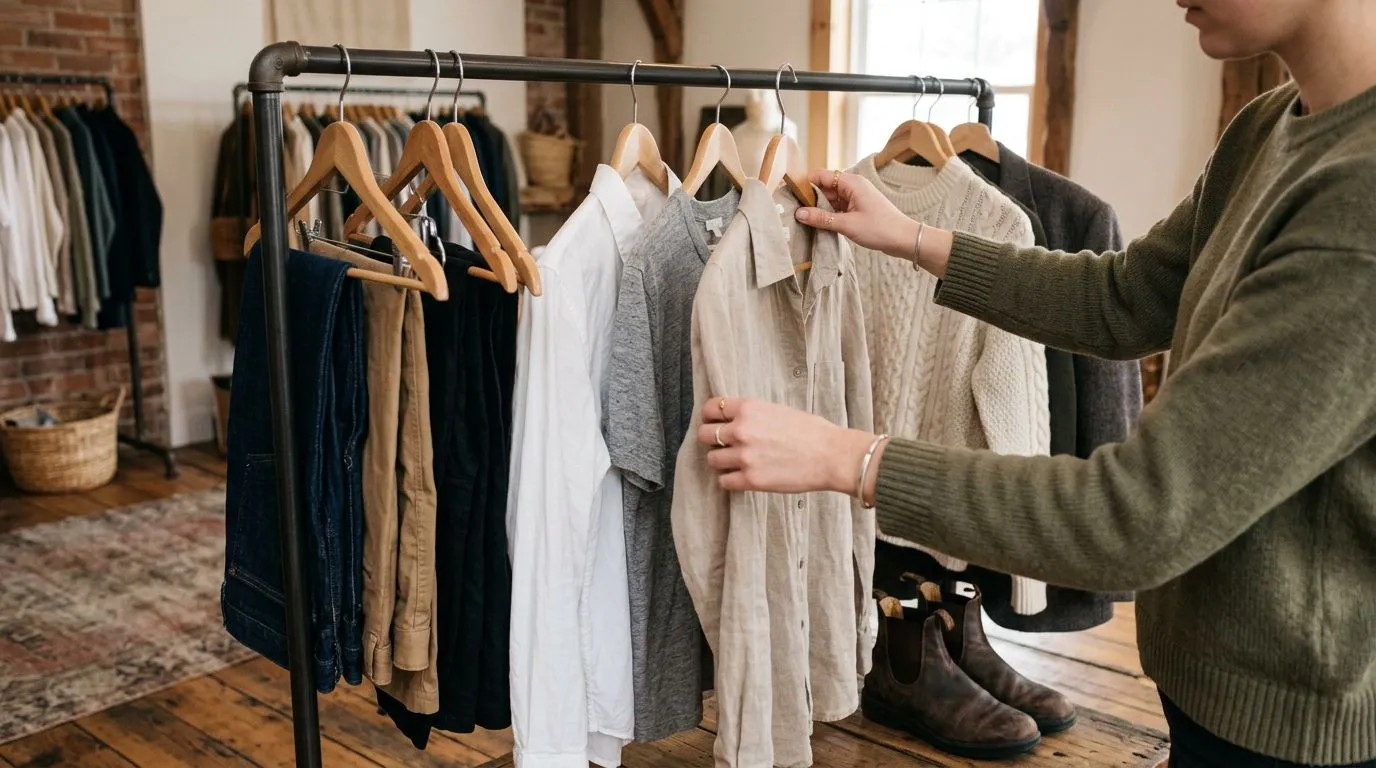
- Tops, bottoms, layers, and shoes are the safest secondhand buys because they can rotate through many outfits instead of sitting idle.
- Neutral colors and simple silhouettes are easier to style more than once, which is the whole point of a capsule wardrobe.
- Tees, button-downs, denim, sweaters, and blazers are easier to inspect for wear than decorative pieces with lots of trim or fragile detail.
- A small target per category keeps thrift shopping focused, because two great white shirts are useful and four almost-right ones are clutter.
How do you check fit, fabric, and condition quickly in the store?
A quick thrift-store check starts with the fabric tag, because the material tells you a lot more about wear potential than the price sticker ever will.
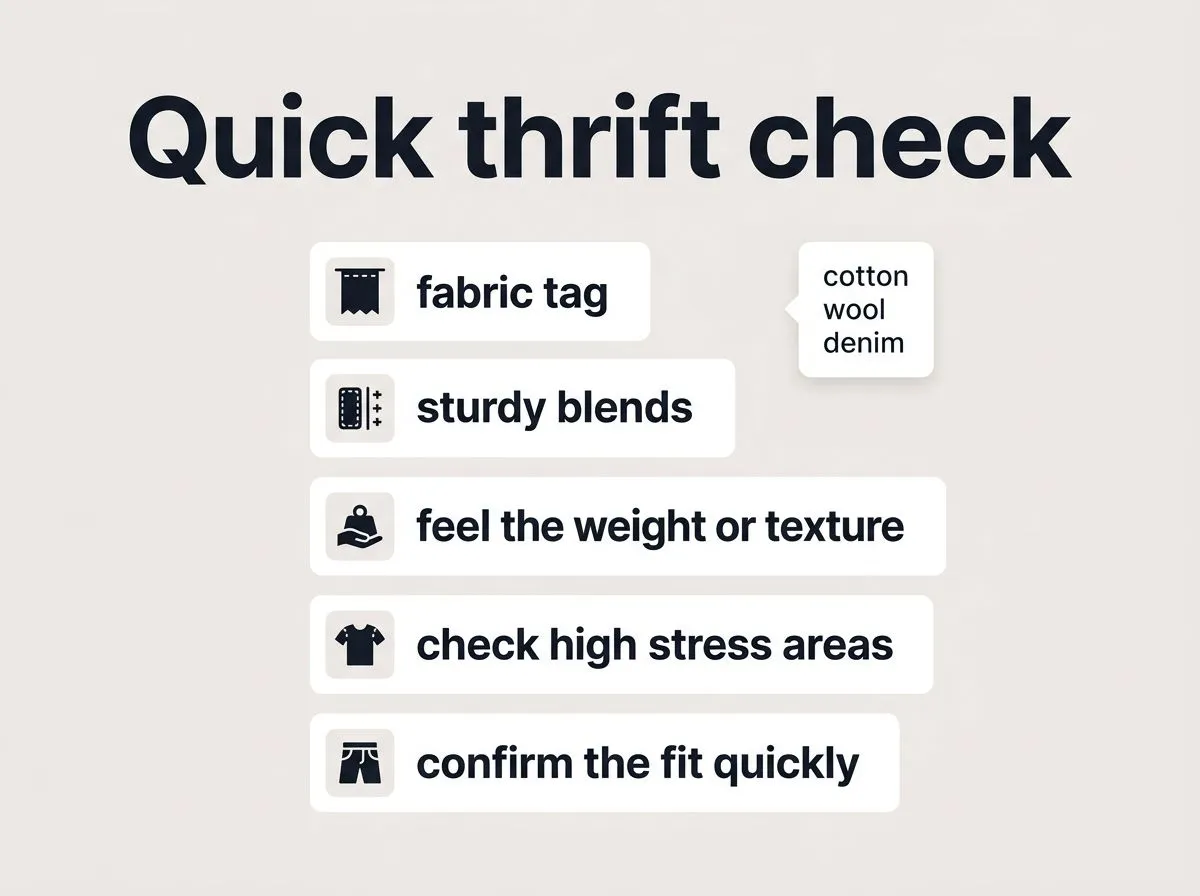
- Read the fabric tag first and favor durable materials that usually hold up well over time, especially cotton, wool, denim, and sturdy blends. Cotton Incorporated notes that cotton is naturally soft and breathable, which is why it is such a common base layer and T-shirt fabric, but breathability alone does not make a piece durable Cotton Incorporated.
- Flip the item inside out and inspect seams, hems, buttons, zippers, and lining. Loose stitching at the underarm or a failing zipper is the kind of repair that turns a cheap find into a hassle.
- Check fit at the shoulders, sleeves, rise, inseam, and through the body. Shoulders that sit wrong usually make the whole garment look off, even if the rest of the piece is a good color and fabric.
- Look for stains, pilling, thinning, odors, stretching, and hidden repairs. A little pilling on a sweater is normal, but thinning at elbows, seat, or cuffs means the garment is already near the end of its life.
What thrift store items should you skip even when the price looks good?
Skip anything that would cost more to repair than to replace. A low tag price can still hide a bad buy, and that bargain disappears fast once you factor in alterations or fixes.
- Pass on pieces with fit problems that would need tailoring costs higher than the item is worth.
- Avoid fragile fabrics, heavy wear, or damage in high-stress areas like collars, cuffs, knees, elbows, and crotches.
- Leave behind items in missing or inconsistent sizes if you cannot try them on, since guessing rarely works in thrift shopping.
- Be cautious with categories that are hard to return, exchange, or resell if they disappoint at home, especially when you are buying online from resale platforms rather than in-store.
How do you build a small wardrobe around a few reliable secondhand pieces?
A thrifted capsule wardrobe works best when each new piece fills a real gap and helps at least three outfits, not when every trip brings home another almost-black top you’ll barely wear.
- Start with a core of tops, bottoms, layers, and shoes that work together across outfits. That usually means a few tees or shirts, one or two pairs of pants or jeans, a sweater or blazer, and shoes you can wear often.
- Use outfit formulas for work, casual wear, and weekends. A shirt plus straight-leg jeans plus loafers is one formula; a tee plus trousers plus a cardigan is another.
- Check whether each new piece can pair with at least three items you already own or plan to buy. If it only works with one thing, it is probably too specific for a lean wardrobe.
- Add only true gaps that increase outfit options, not duplicates that do the same job. A second black sweater sounds practical until it crowds out the item that would have solved a real need, like a light layer or a better-fitting pair of trousers.
What outfit formulas prove the capsule wardrobe is complete?
A complete capsule wardrobe covers the outfits you actually wear in a normal week, not a fantasy calendar full of formal events and beach vacations.
| Occasion | Top | Bottom | Layer | Shoes |
|---|---|---|---|---|
| Office or client meeting | Button-down shirt | Straight-leg trousers | Blazer | Loafers |
| Casual work-from-home day | Cotton tee | Dark denim | Cardigan | Clean sneakers |
| Weekend errand run | Crewneck sweater | Jeans | Light jacket | Slip-on sneakers |
| Dinner out | Fitted knit top | Trousers or dark jeans | Structured jacket | Ankle boots |
| Travel day | Breathable tee | Stretchy pants | Zip hoodie or overshirt | Comfortable walking shoes |
If those five rows feel easy to pull together from your closet, your thrift shopping is on track. If one category keeps failing, that gap is telling you what to buy next, and it’s usually a better bottom, a cleaner layer, or a shoe you can wear for hours without thinking about it.
Secondhand shopping rewards discipline more than volume, so the strongest capsule wardrobe is the one built from pieces that fit, hold up to regular wear, and pair without effort.
Goodwill, The Salvation Army Family Stores, Savers, Buffalo Exchange, Depop, Poshmark, and ThredUp all offer different ways to find those items, but the buying rule stays the same: pick the garment that expands your outfit range, not the one that only feels cheap.
If you’re deciding between two similar finds, go with the one that has better fabric, cleaner construction, and fewer signs of wear, because that’s the piece most likely to keep earning its spot.
Frequently asked questions
How many pieces should a thrift store capsule wardrobe have?
A practical thrift-store capsule usually starts with a small core, then grows only when you find real outfit gaps. The article’s approach is less about hitting a magic number and more about covering your normal week with tops, bottoms, a layer, and shoes that can each work at least three ways. Laundry frequency, climate, and your routine still decide the final count.
Should I wash thrift store clothes before wearing them?
Yes. Wash or clean thrifted clothes before you wear them, especially anything that sits close to the skin. It helps remove residue and also shows whether the item shrinks, twists, or loses shape after cleaning, which matters a lot for capsule pieces you expect to wear often.
Can you tailor thrifted clothes for a capsule wardrobe?
Yes, but only when the piece is worth more to you than the alteration cost. The article also makes the fabric point clear: choose garments with enough structure to hold the fix, because a cheap repair on flimsy material can still leave you with a shirt or pair of pants that never fits or hangs right.
What thrift store items are hardest to make work in a capsule wardrobe?
The hardest pieces are the ones that do not repeat well, even if they look interesting on the rack. That usually means trend-heavy items, fragile fabrics, and anything that only works with one or two outfits instead of three or more. If a piece does not help fill a real wardrobe gap, it is usually a dead end.